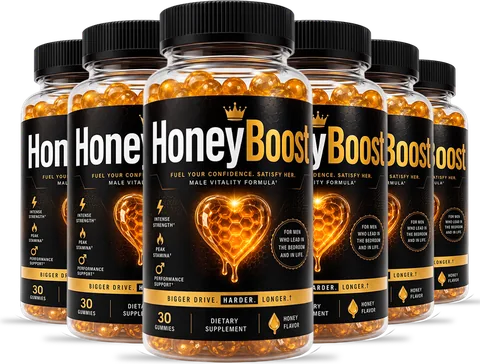
The six ingredients listed by the brand for HoneyBoost™ have roots in very different places: Horny Goat Weed Extract in Asian woodlands, Tongkat Ali in Southeast Asian rainforest, Maca in the high Andes, Panax Ginseng in East Asia, plus L-Arginine as an amino acid and Zinc as a mineral. This tour covers botany and culture only.
Stop one: the woodlands of Asia · Stop two: the rainforests of Southeast Asia · Stop three: the high Andes · Stop four: Korea, China and the ginseng belt · Stops five and six: the nutrients in your pantry
- Three of the listed botanicals trace back to Asia and one to the Andes of Peru.
- L-Arginine and Zinc are nutrients found in everyday foods.
- This page covers origins, botany and culture, not effects.
- All listings are stated by the brand.
Stop one: the woodlands of Asia
Horny Goat Weed Extract starts with a leafy plant in the genus Epimedium, a group of low-growing perennials that thrive in shaded woodland and rocky slopes across parts of Asia and the Mediterranean region. The common name comes from an old folk tale about goats grazing on the plant, and the story has traveled farther than the plant itself.
In gardens, Epimedium is known by gentler names like barrenwort and bishop's hat, and it is prized as a hardy ground cover. It is a good reminder that many ingredients with colorful nicknames are, botanically, quiet and ordinary plants.
Botanists sometimes joke that Epimedium is among the easiest plants to grow and among the hardest to spell. Its heart-shaped leaves flush bronze in spring and turn green by summer, so it is as much a garden favorite as a traditional herb.
Stop two: the rainforests of Southeast Asia
Tongkat Ali is the name used for Eurycoma longifolia, a slender tree native to the tropical forests of countries such as Malaysia and Indonesia. The name is Malay and is often translated as Ali's walking stick, a nod to the plant's tall, straight form.
The root is the part associated with the ingredient, and it has a long place in the traditional culture of the region. Because it grows slowly in tropical forest conditions, it is often described as a plant tied closely to its homeland.
Ready to start your routine?
HoneyBoost: a honey-flavored daily gummy for men, two a day, with a 60-day money-back guarantee.
Order HoneyBoost NowStop three: the high Andes
Maca is the odd one out geographically. Lepidium meyenii grows on the cold, windy plateaus of the Peruvian Andes, at elevations above 4,000 meters, where few crops can survive. It is a root vegetable in the same family as radishes and turnips, and the stored roots come in shades of cream, yellow, red and deep purple.
Andean communities have farmed maca for centuries, drying the roots and grinding them into flour. Maca Root Extract on the label refers to a concentrated form drawn from that root.
Those conditions explain why maca is so closely tied to its place. Frost, thin air and strong sunlight shape a compact plant that stays low to the ground, with the swollen root underground doing most of the work of storing energy for the plant itself.
Stop four: Korea, China and the ginseng belt
Panax ginseng, sometimes called Asian or Korean ginseng, is a slow-growing perennial whose root is the prized part. It is cultivated in Korea and northeastern China, and fields are often shaded under straw canopies. The plants can take years to mature before the roots are harvested.
The genus name Panax shares a Greek root with a word meaning all-encompassing, which tells you how highly past cultures regarded it. Ginseng is a staple of East Asian food and tea culture, so it appears in markets and kitchens as well as supplements.
Wild ginseng became rare long ago, which is why farming took over. Today the typical ginseng field is a patient business, with growers rotating plots because the soil needs years to recover between crops.
Stops five and six: the nutrients in your pantry
L-Arginine and Zinc are different kinds of ingredients. They are not tied to one landscape. L-Arginine is an amino acid, found in protein foods such as poultry, fish, dairy, nuts and seeds. Zinc is a mineral found in foods like beef, shellfish, beans and pumpkin seeds.
You can look up the food sources of either in the USDA FoodData Central database, which lists the nutrient content of thousands of everyday foods, and the NIH Office of Dietary Supplements has a fact sheet on zinc.
To see the lineup as a whole, the formula page lists all six, and the what is HoneyBoost overview shows how they fit into a honey-flavored daily gummy. The product is positioned around everyday energy, stamina and vitality in an active routine, and the brand states 2 gummies a day with water, preferably with a meal.